Founder & Creative Director · SFMedia
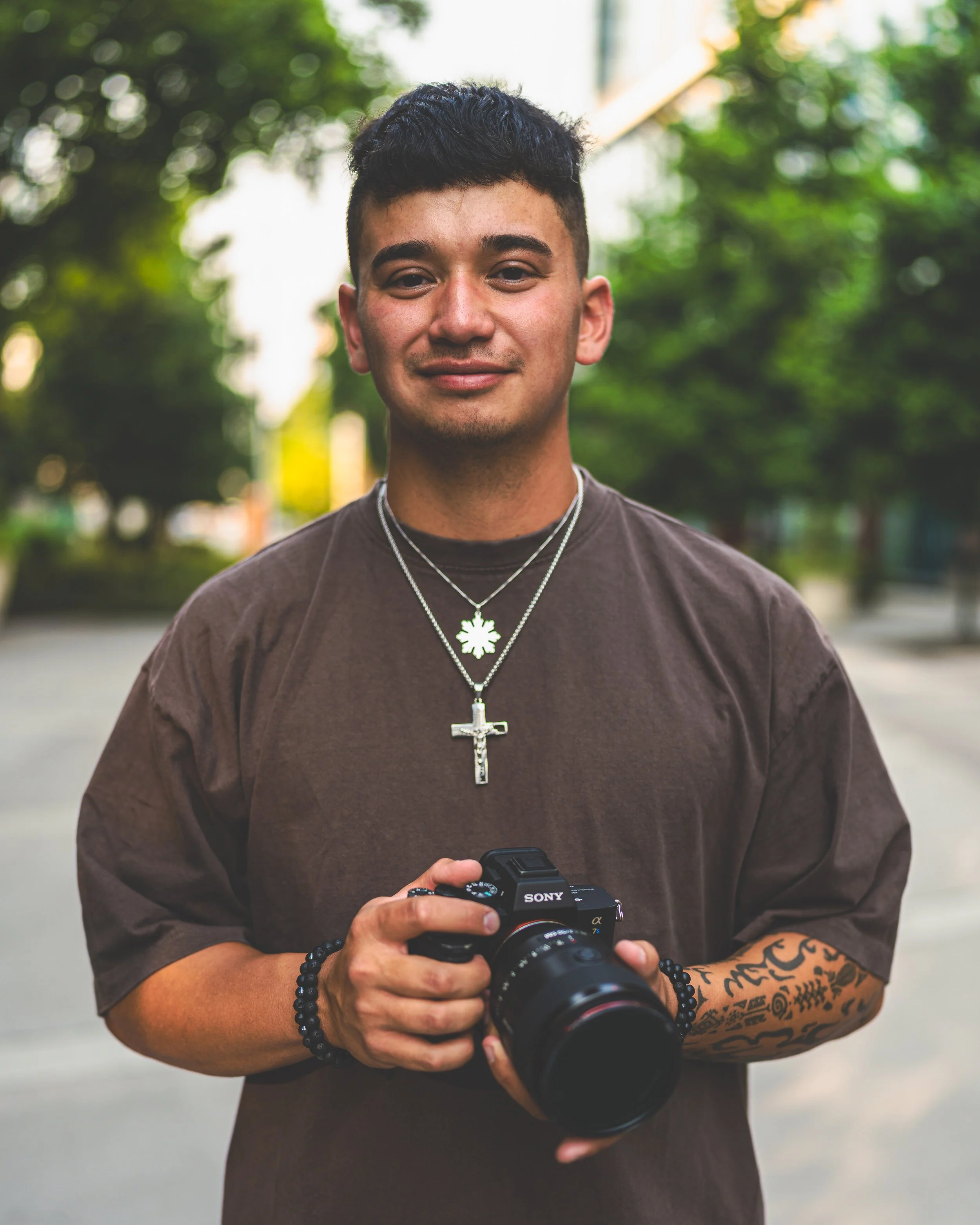
Sean Noche-Schultz
Photographer & Videographer
I don't just point a camera at the world — I look for the moments, the light, the feeling that most people walk right past. Then I capture it.
The Origin
How It All Started
In 2019, I picked up a camera for the first time — and something clicked. Not just the shutter. Something inside me. The way a single frame could hold an entire emotion, a whole story, a feeling you couldn't put into words — that hooked me completely and never let go.
Those early months were pure obsession. I studied light the way some people study scripture. I spent hours thinking about composition, about what makes a frame feel alive versus just correct. I wasn't trying to build a career yet — I was just chasing that feeling you get when an image actually says something.
About six months in, I stumbled into filmmaking — and a second world opened up. Video wasn't just photography in motion. It was a completely different language. Pacing. Sound design. The way an edit can make someone feel something before they even understand why. I was obsessed all over again.
So I didn't choose. I committed to both. Photography and film, side by side — two tools for the same purpose. Telling stories that matter. Capturing what's real. Making people feel something when they look at the screen.
The Turning Point
When the World Stopped — and I Didn't
2020 shut everything down. Shoots cancelled. Industries frozen. For a lot of creatives, it felt like the work dried up overnight. For me, it became the most important year of my life as a filmmaker.
I had time — more than I'd ever had — and I used every single hour of it. I went deep into camera systems, lighting theory, color science, editing workflows, sound design, and the philosophy of filmmaking itself. Not surface-level tutorials. Real, obsessive, can't-stop-watching study.
I watched how cinematographers built their frames. I studied why certain edits hit harder than others. I learned color grading not just as a technical skill but as an emotional language — the way warmth or cool tones can completely change how a viewer feels about what they're seeing.
I also started to understand the business side of creative work — how to communicate with clients, how to approach a brief, how to translate someone's vision into a visual strategy.
When the world reopened, I wasn't the same person who had closed his door in March. I came back sharper, more intentional, and with a level of knowledge that would have taken years to build any other way. The pandemic didn't pause my growth. It compressed it.
What Drives Me
The Fire Behind the Work
I've never been motivated by equipment or trends or whatever style is popular right now. What drives me is the moment when someone watches something I made and says — "that's exactly how it felt." That connection. That accuracy of emotion. That's what I'm chasing every single time I pick up a camera.
Photography and film are empathy tools. When they're done right, they let people see the world through someone else's eyes — feel what another person feels, understand a story that isn't theirs. That's extraordinary. And I take that responsibility seriously on every single project, no matter how big or small.
I started SFMedia because I wanted to build something that reflected that belief. A production company that doesn't just deliver content — it delivers meaning. Every brand has a story worth telling. Every artist has a vision worth bringing to life. My job is to find that story and give it a visual voice that people can't look away from.
My Creative Philosophy
How I Think About the Work
-
Every Frame Is a Decision Nothing in a great photograph or film is accidental. The angle, the light, the moment of the shutter — every single element is a choice. I approach every shoot with that level of intentionality. Not because it's a rule, but because the difference between good work and great work lives in the details most people never consciously notice — but always feel.
-
Emotion Is the Real Product Clients hire me for photos and videos — but what they're really paying for is a feeling. The feeling their audience gets when they see the content. Technical execution is the tool. Emotional resonance is the goal. I never lose sight of that, no matter what the project is.
-
The Story Comes First Before I touch a camera, I want to understand the story. Who is this for? What do they need to feel? What does this brand, this artist, this moment actually mean? The answers to those questions shape every visual decision that follows. I'm not here to make content — I'm here to tell your story in a way that sticks.
-
Growth Is Non-Negotiable The day I stop learning is the day the work starts to suffer. I'm constantly studying — new techniques, new filmmakers, new ways of seeing. Not because I feel behind, but because I'm genuinely in love with this craft. That curiosity and hunger is what keeps the work fresh, sharp, and always moving forward.
-
Simplicity Is the Hardest Thing Anyone can make something complicated. The real challenge is making something clean, clear, and powerful. The best images I've ever seen don't overwhelm you — they hit you with one thing, and they hit you hard. That restraint and clarity of vision is something I work toward on every single shoot.
-
Show Up Fully or Don't Show Up I don't believe in halfway. When I take on a project, I'm in it completely — thinking about it before I sleep, problem-solving in the shower, looking for references everywhere I go. That level of investment isn't something I turn on for big clients and off for small ones. Every project deserves everything I've got.
The Craft Up Close
What the Work Actually Looks Like
People see the final photo or the finished video — but they don't always see what goes into getting there. They don't see the hours spent scouting a location to understand how the light moves at different times of day. They don't see the pre-production conversations where I ask questions until I fully understand what the client actually needs — not just what they said they want, but what they mean.
They don't see the time spent in post — sitting with an edit until it breathes right, dialing in a color grade until the emotional tone of every scene matches the feeling the story needs. That's where a lot of the real work lives. In the invisible hours. In the decisions nobody ever sees, that shape everything the audience does.
On set, I run a tight but collaborative environment. I come prepared — lighting planned, camera settings dialed, shot list ready — but I stay flexible. Some of the best moments in photography and film happen when you're loose enough to catch what you didn't plan for. That balance between preparation and presence is something I've spent years learning to hold.
I've worked on productions of all sizes — from solo shoots with a single camera and natural light, to multi-camera setups with full lighting rigs and production crews. Each environment teaches you something different. And every single one has made me better at what I do.
Where I Am Now
Five Years In — and Just Getting Started
Five years into this journey, I can honestly say I'm more excited about photography and filmmaking than I've ever been. Not because everything is figured out — but because the more I learn, the more I realize how deep this craft goes. There's always another level. Another technique to master. Another way of seeing I haven't discovered yet.
Through SFMedia, I'm working with businesses, brands, and creators who want their story told with real intention and professional execution. I'm building something I'm proud of — one project at a time, one frame at a time.
If you've read this far, you probably already know whether we're a good fit. The work speaks for itself. And if you have a story worth telling — I'm here for it.
Let's Make Something Worth Remembering
If you have a vision worth bringing to life, I'd love to hear about it. Let's talk about your project.
Start a Project →